Diderot and d’Alembert restructured the categorisation of knowledge while conceptualising the Encyclopédie, reconstructing the existing system of classification based on Francis Bacon’s inductive reasoning, and completed it in 1772. In contrast, the engravers who created the plates for the Encyclopédie endeavoured to faithfully reproduce facts as much as possible to realise the editor’s ideals, but the representation varied due to the individual stylistic traits of each engraver. The frontispiece, designed by Cochin, is a prime example of how the editor’s ideals were expressed through metaphor and symbolism. Particularly, his imaginative approach is considered one of his greatest achievements.
Inductive reasoning, which draws conclusions from observations, was a fundamental shift in thinking that challenged the established practices of philosophers, scientists, and artists who relied on deductive reasoning. Today, however, inductive reasoning is fundamental across disciplines, including design. Traditionally, I was taught to set a concept, support it with research and experiments, and then draw conclusions. Yet, through the ENPF 1/16 project, I realised that there were alternative approaches. I have found that starting with imagination, rather than following the process that I was used to, opened unexpected possibilities for the design process.
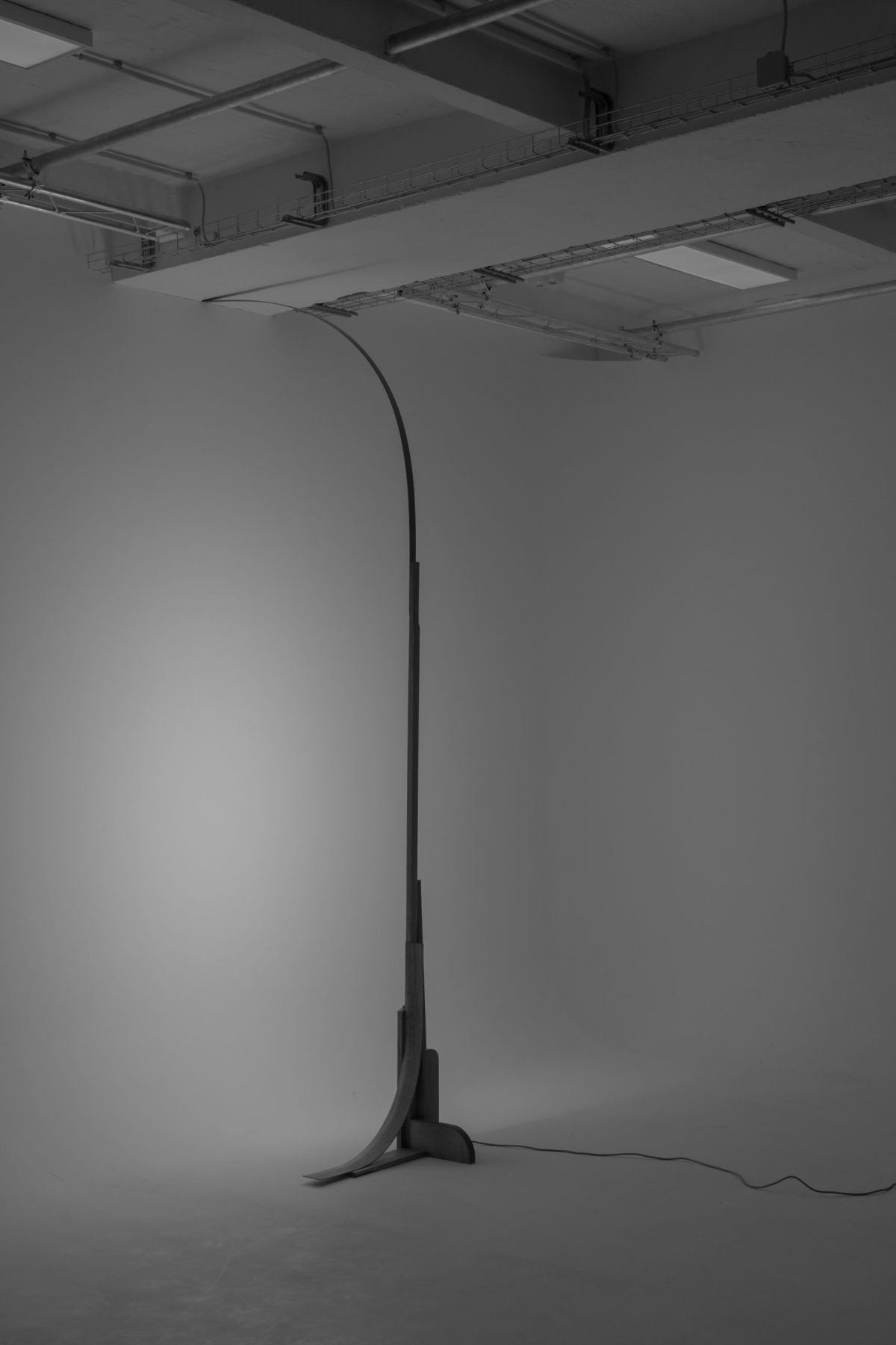
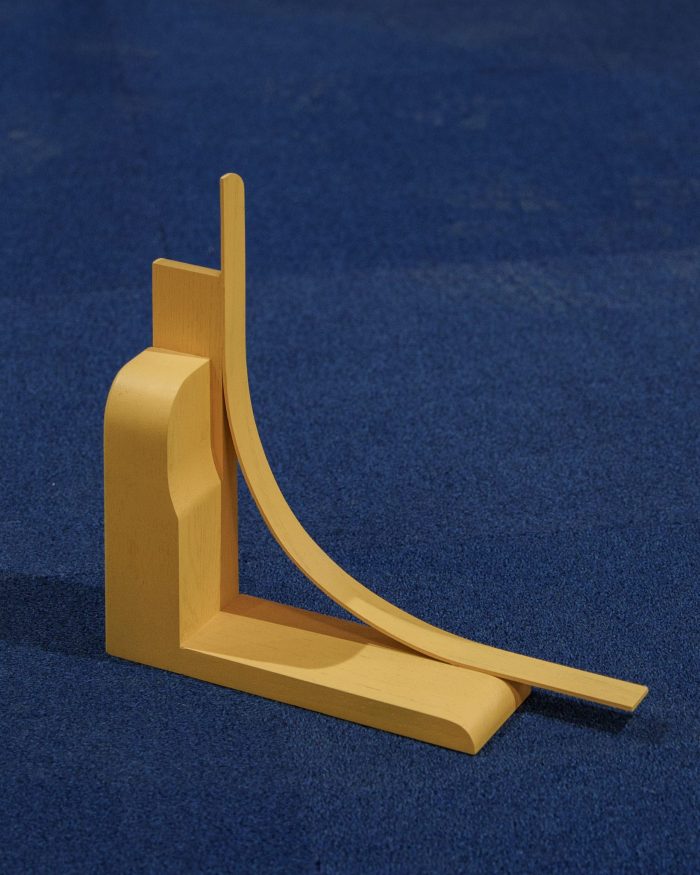
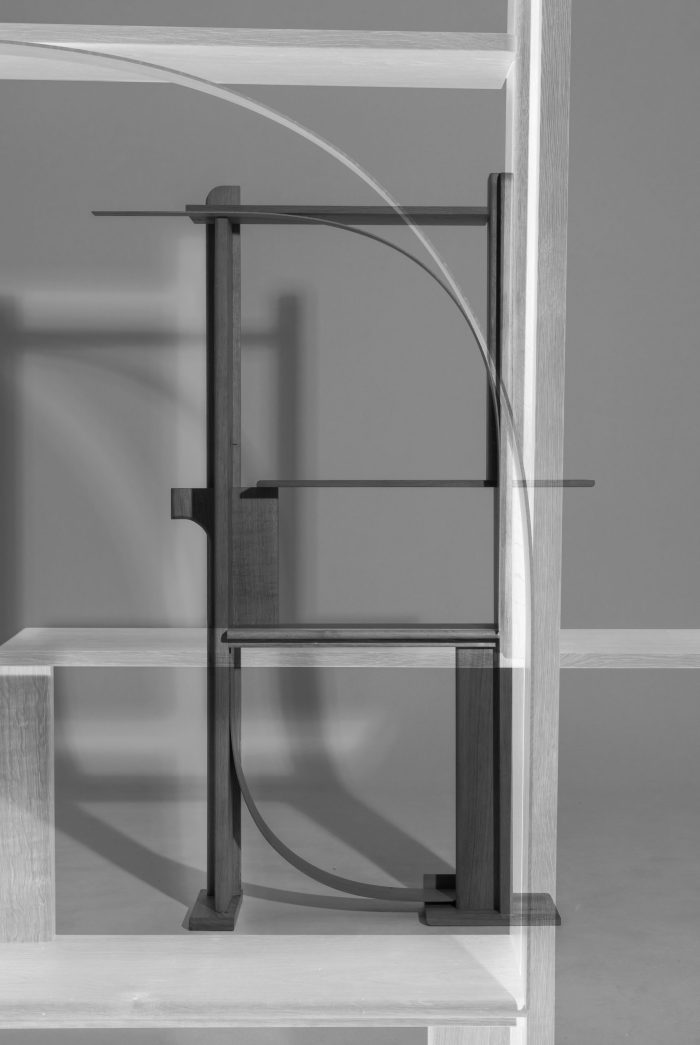
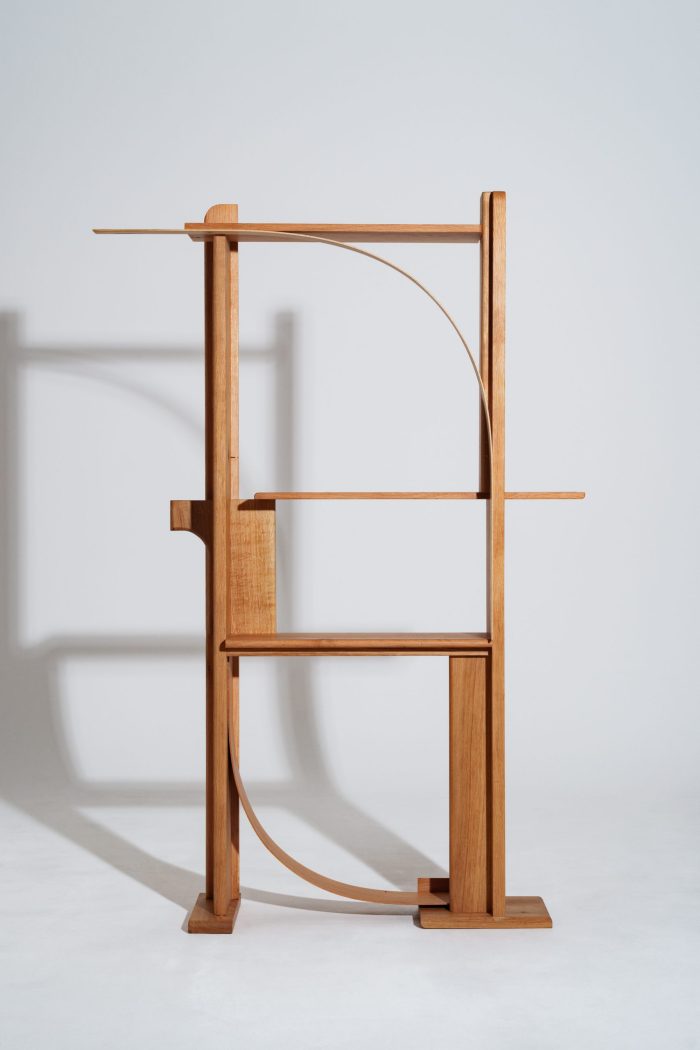
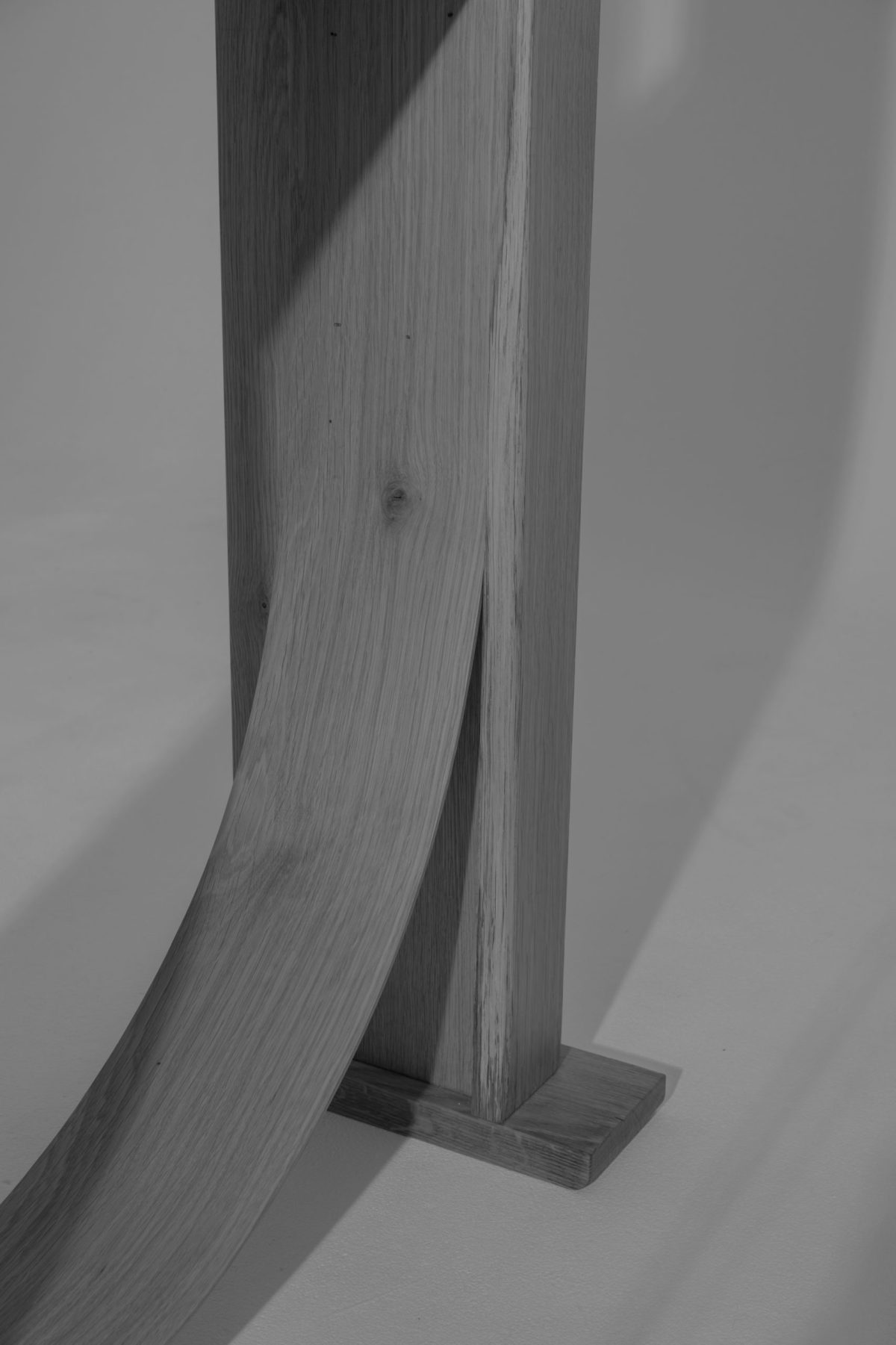
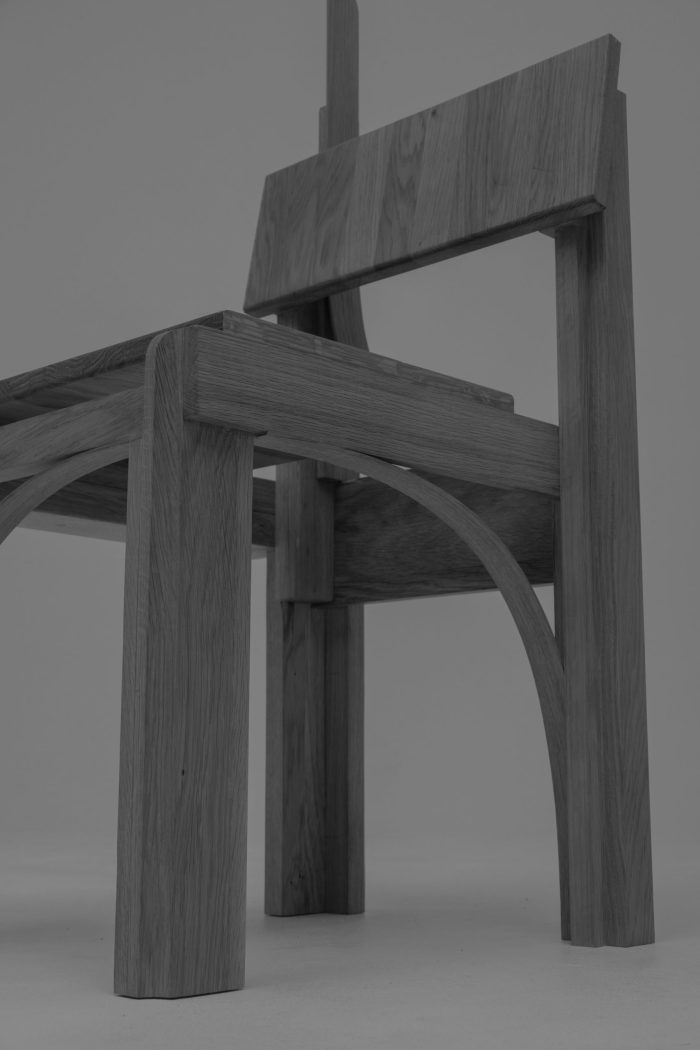
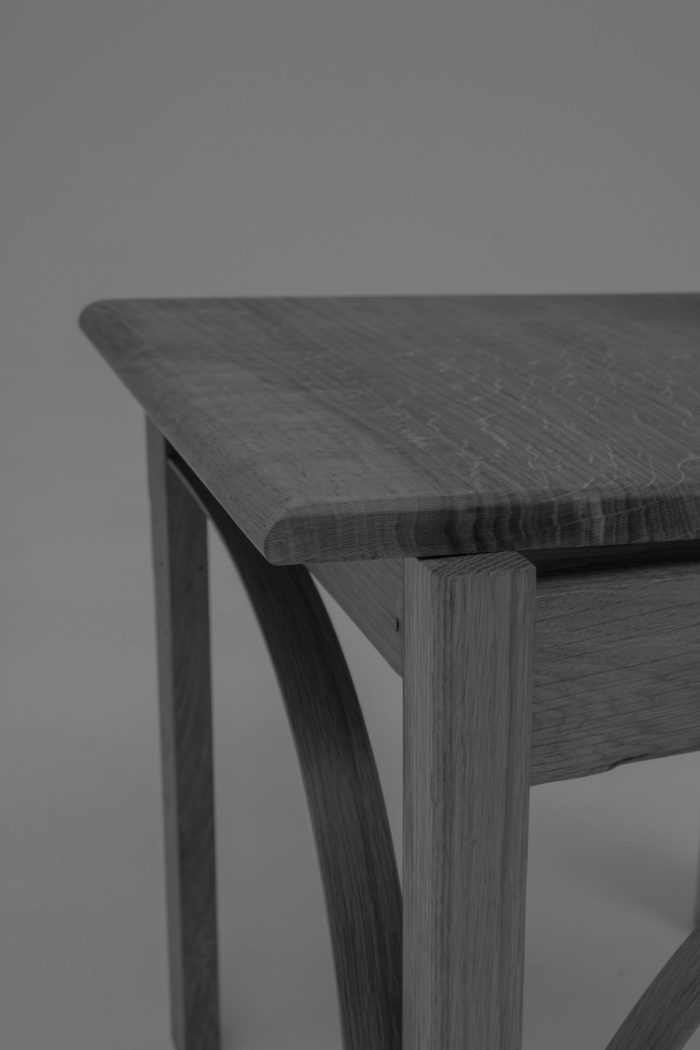
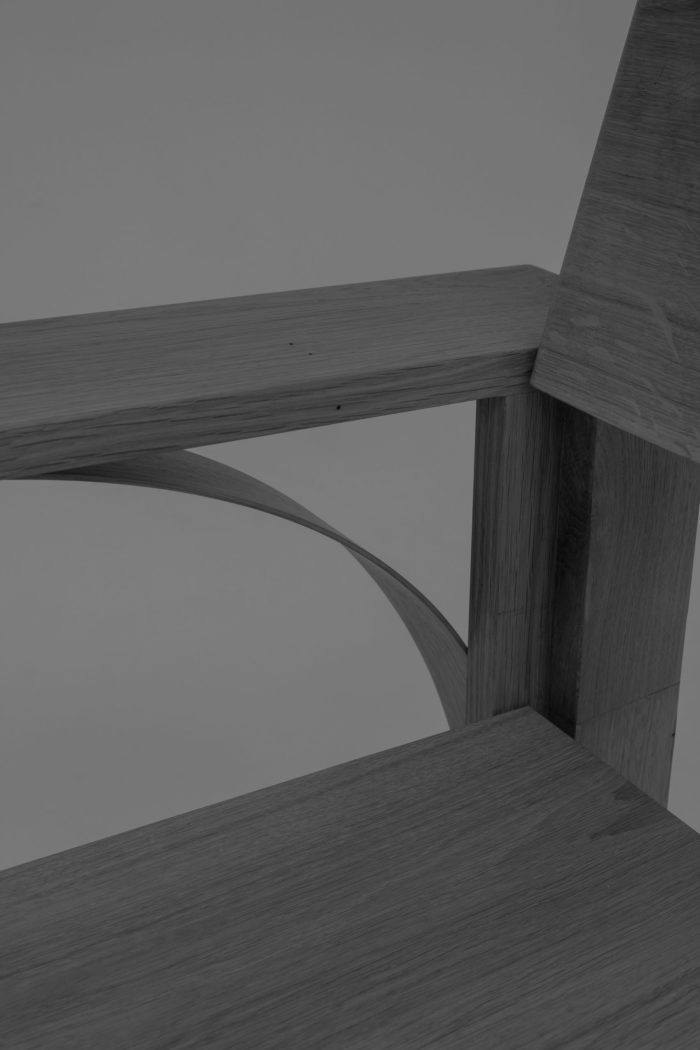
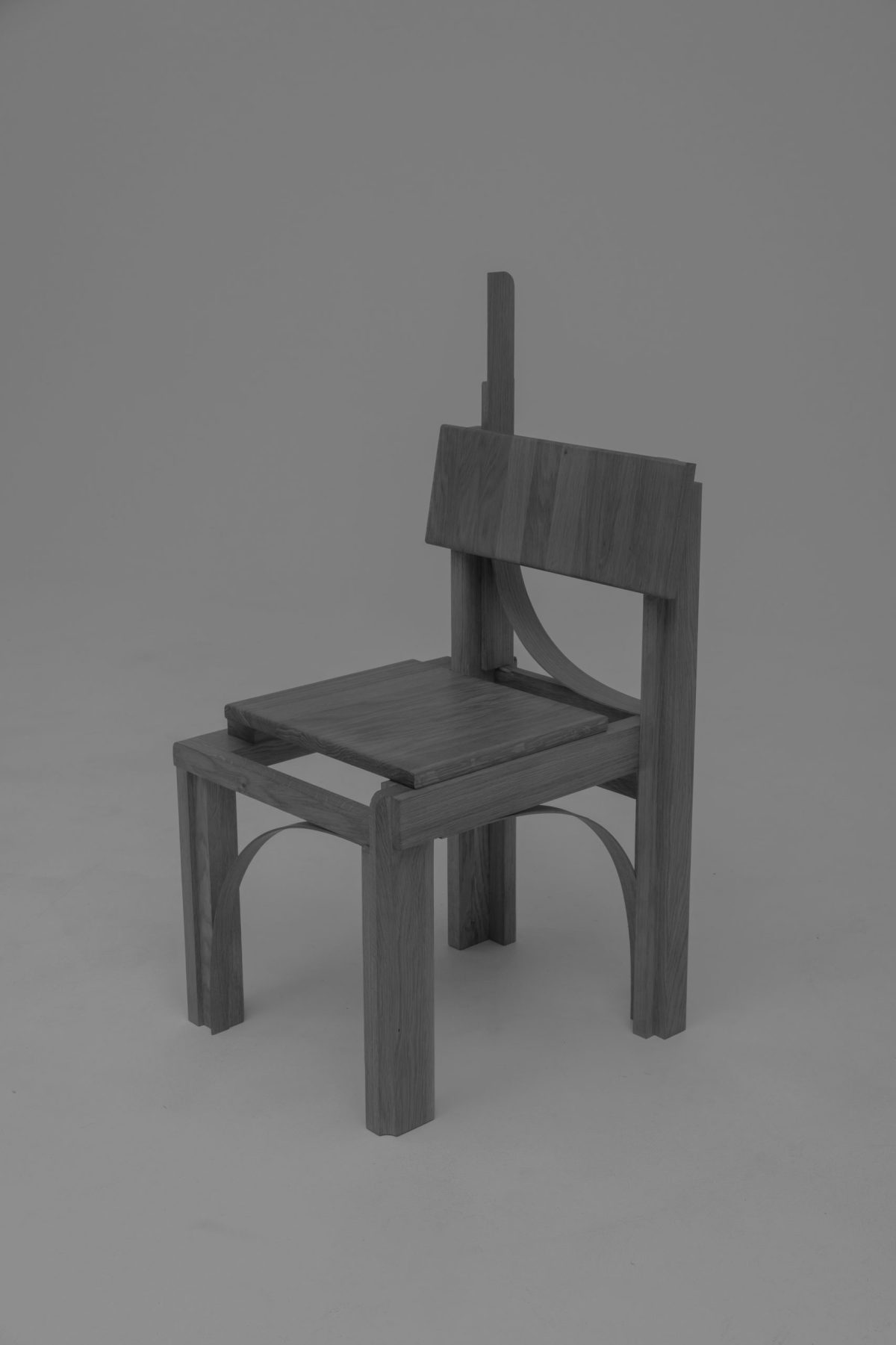
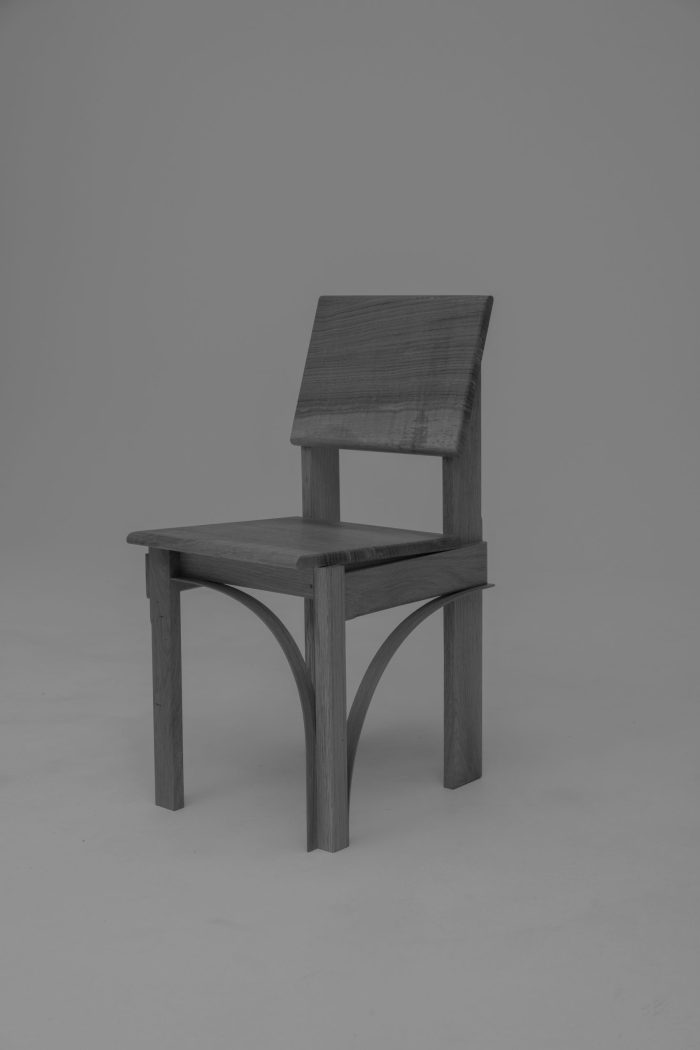
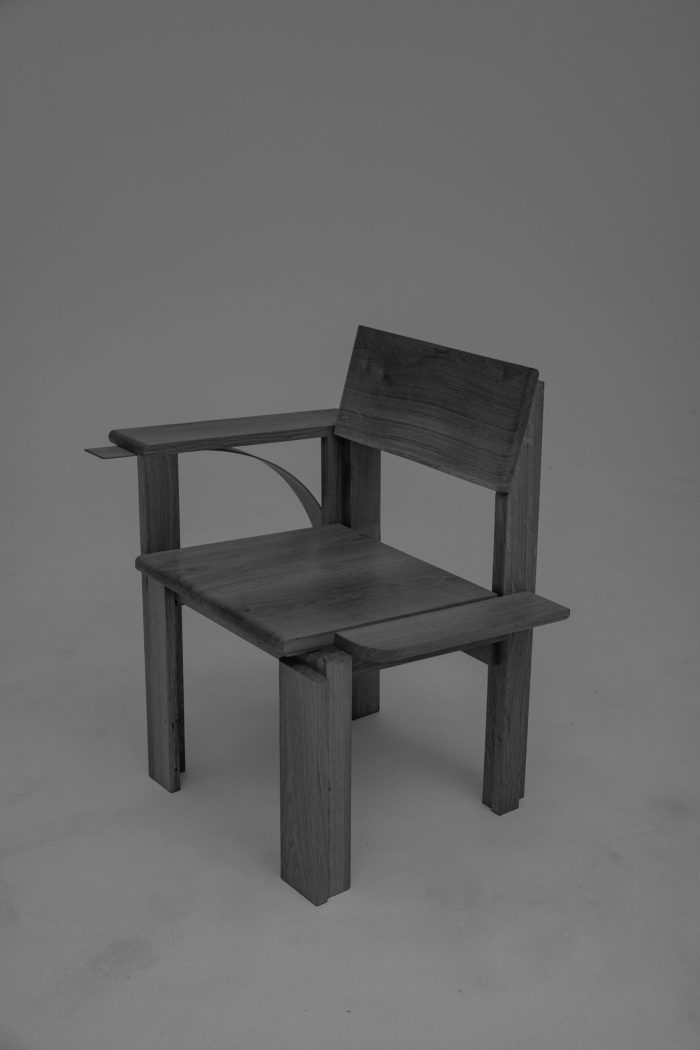
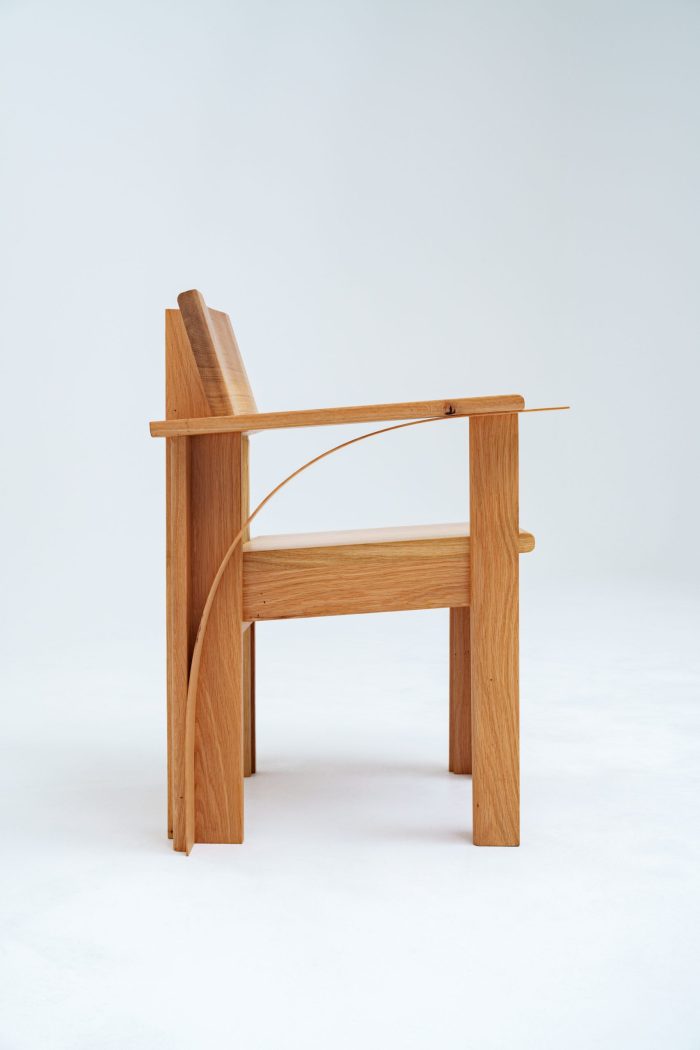
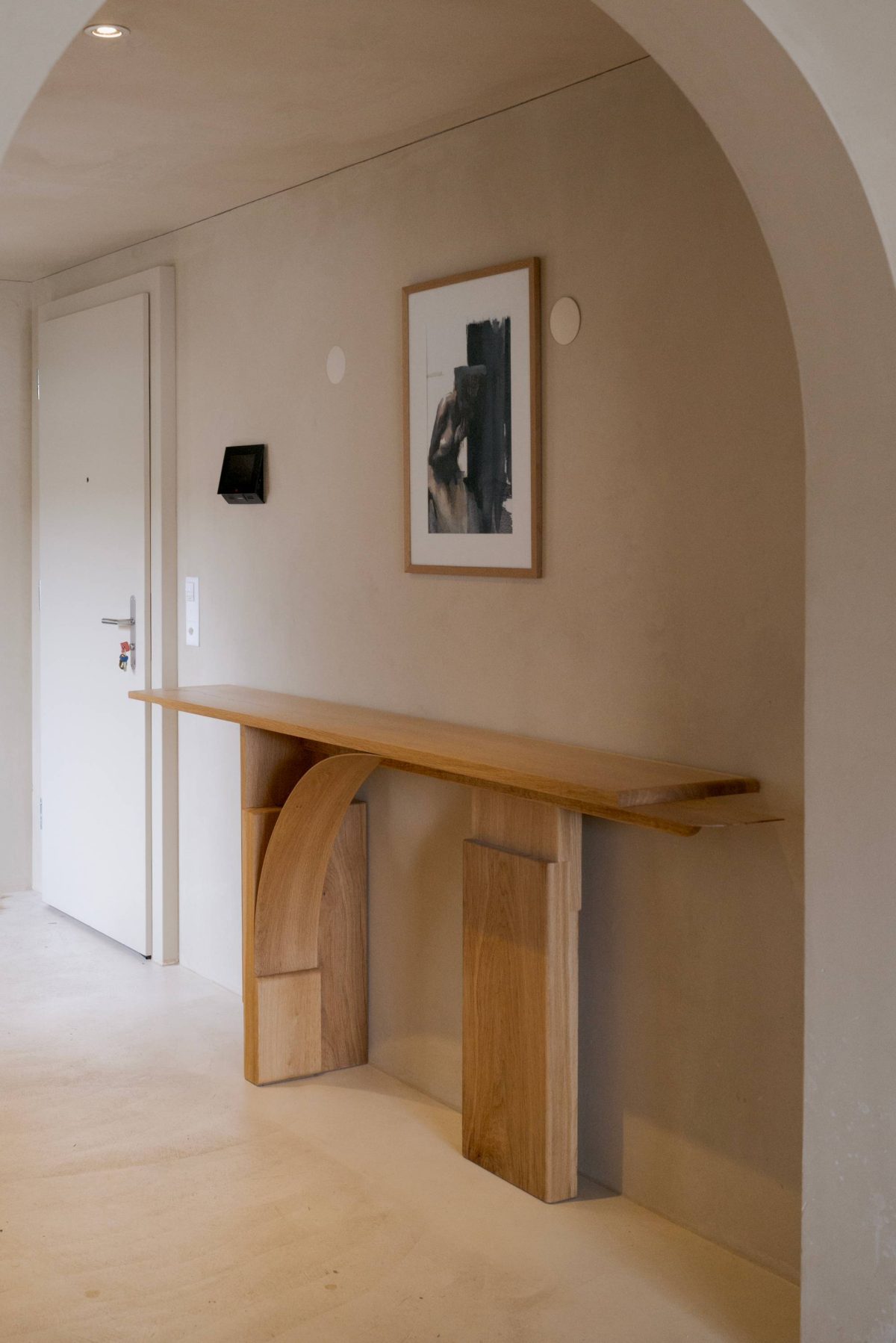
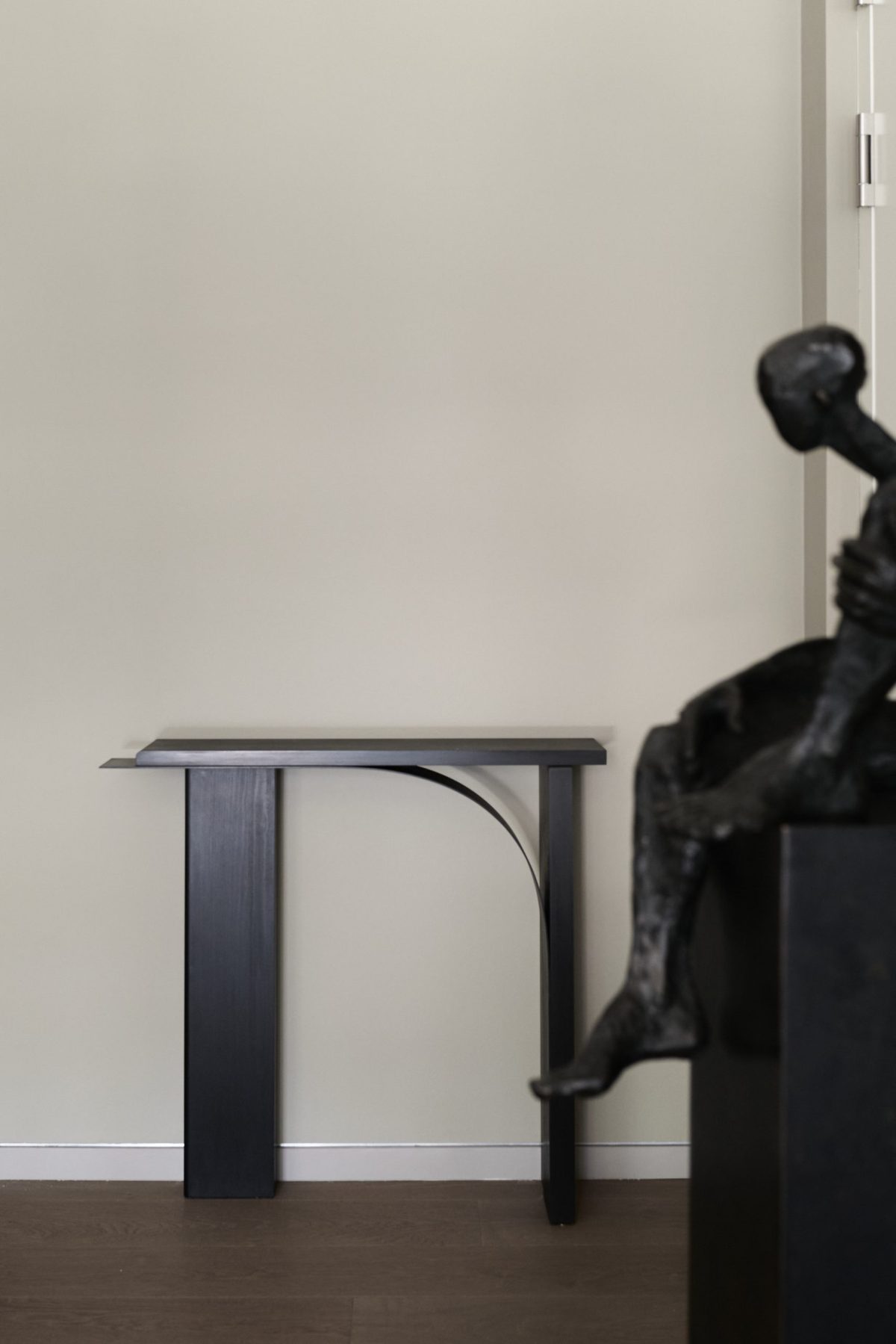
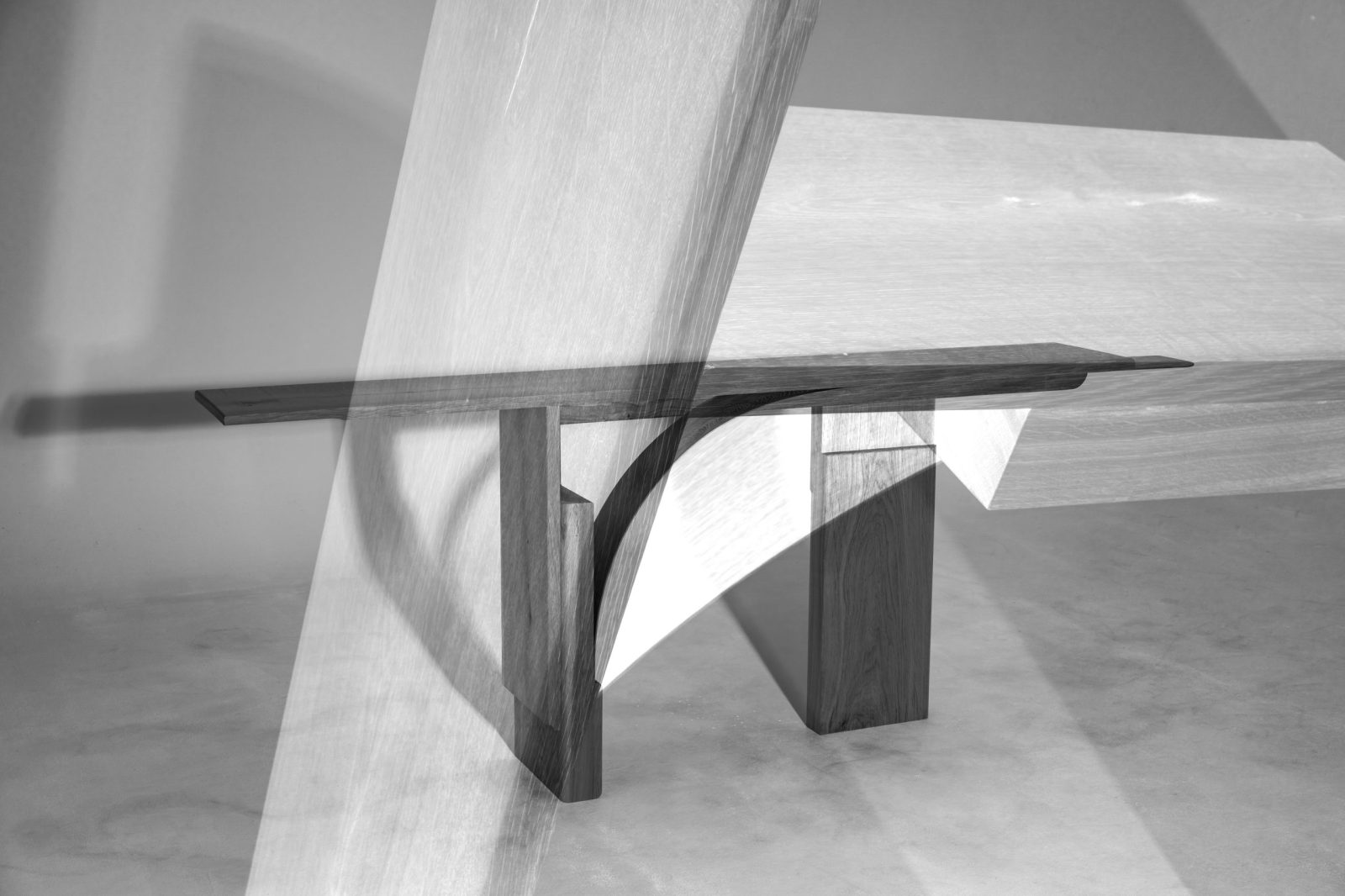
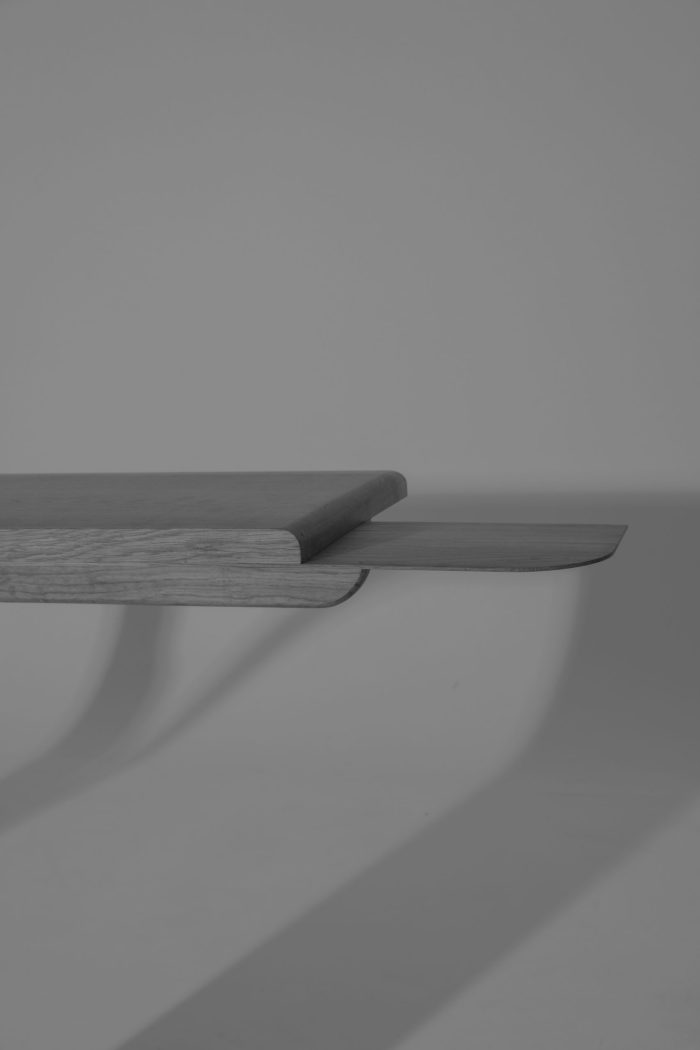
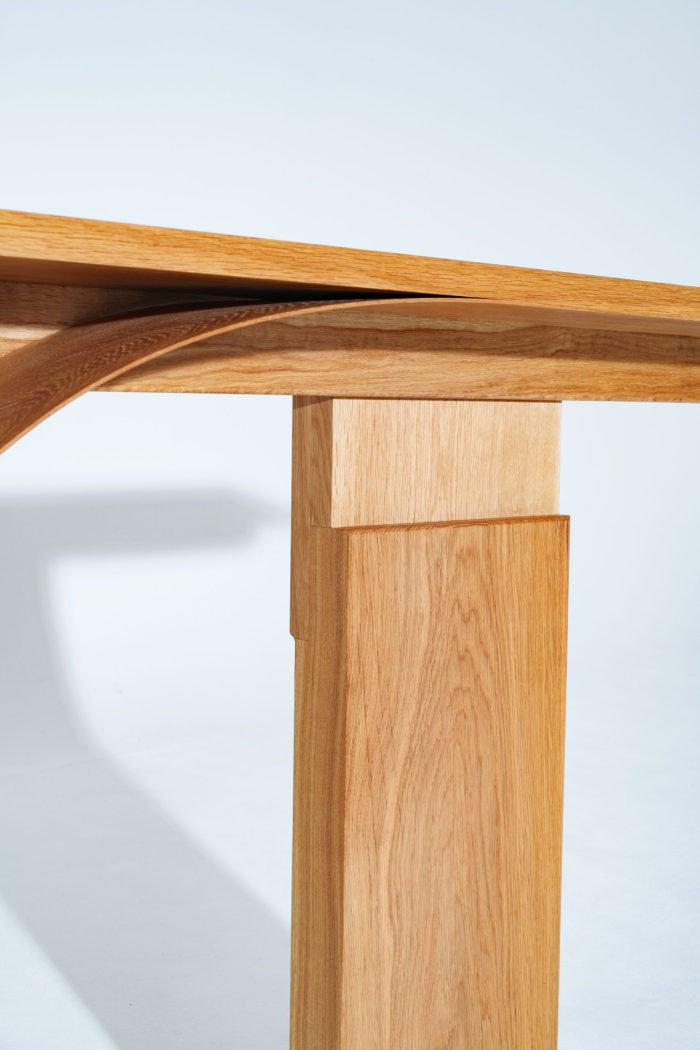
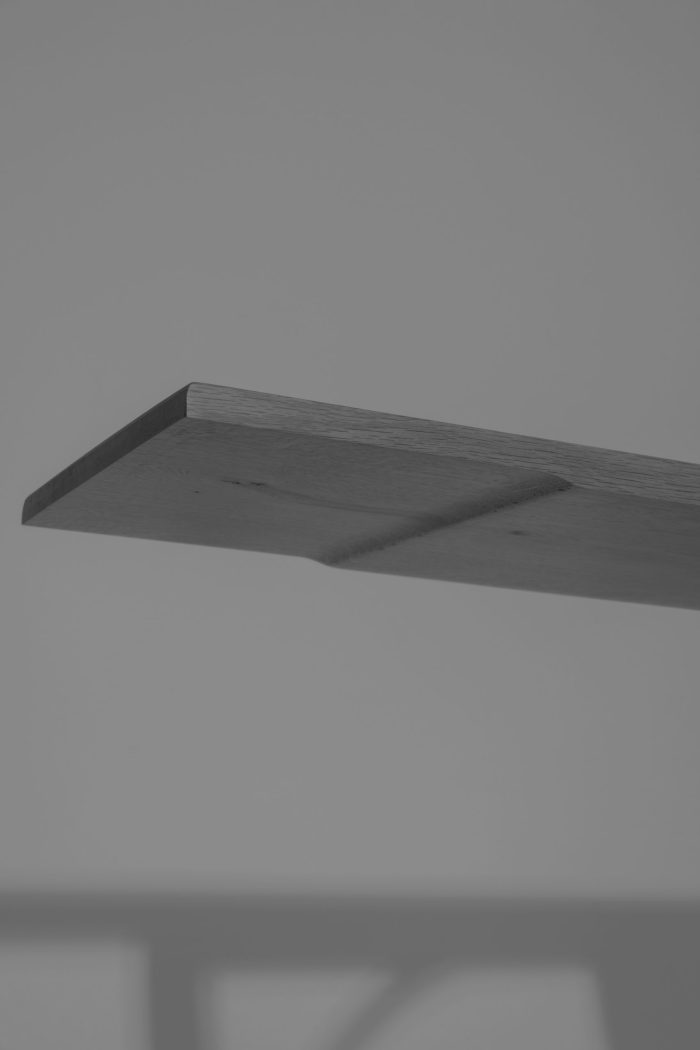
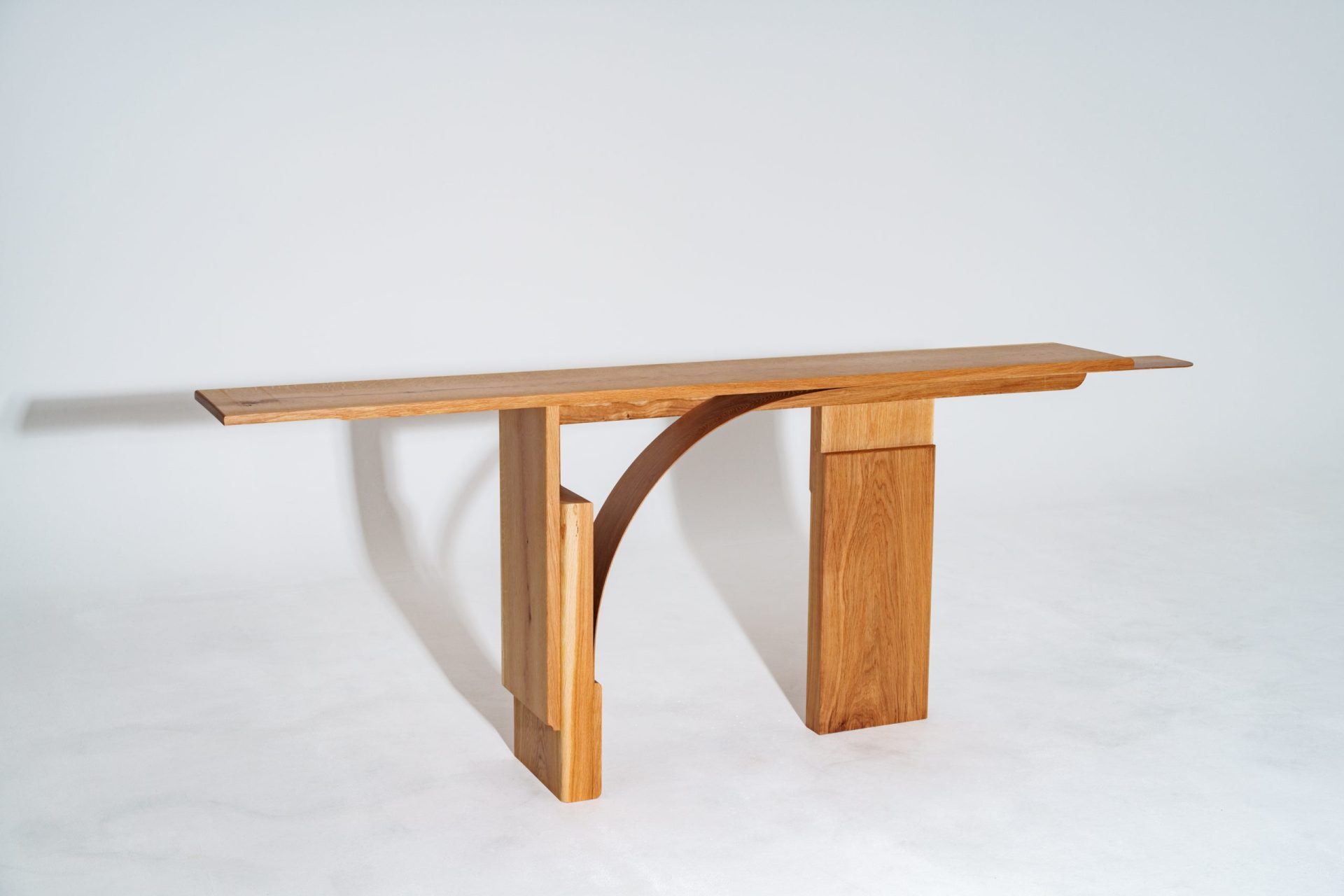
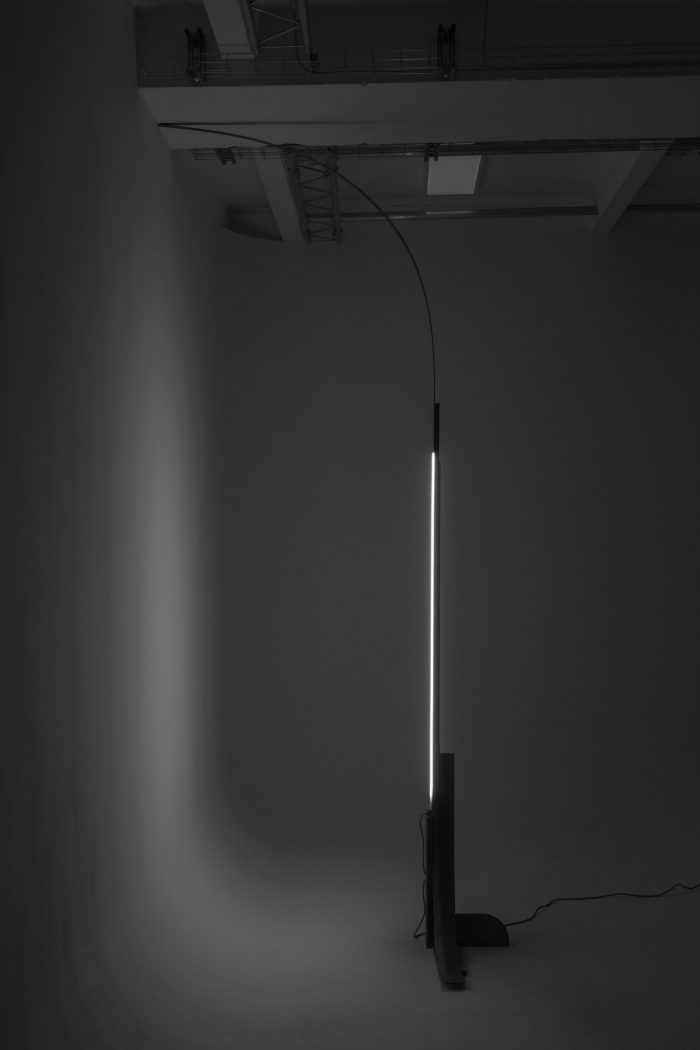
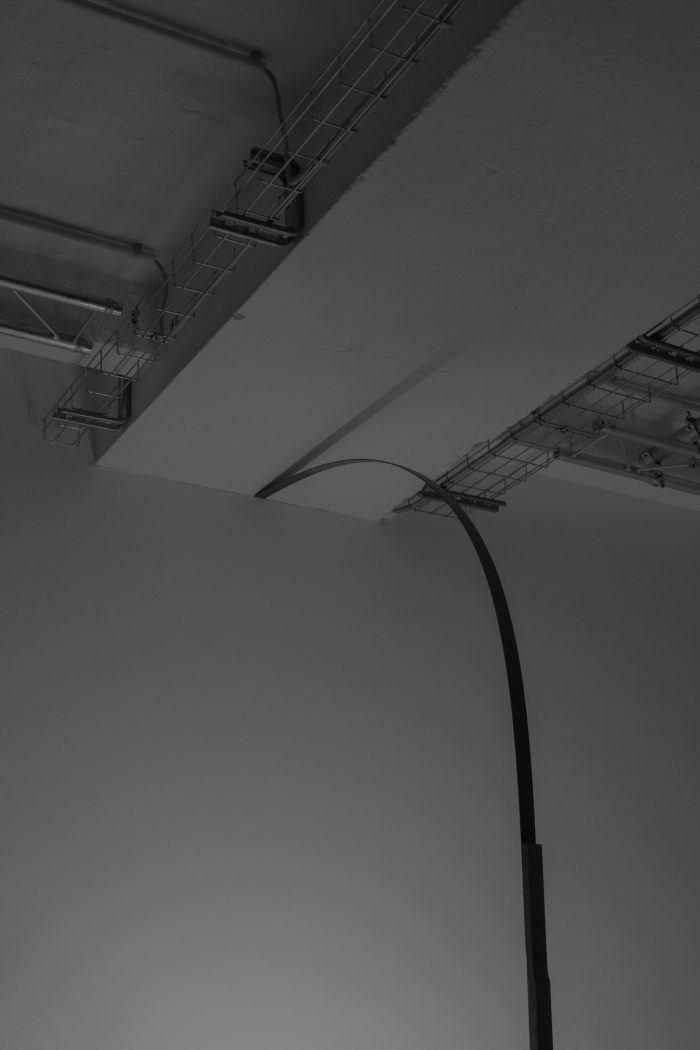
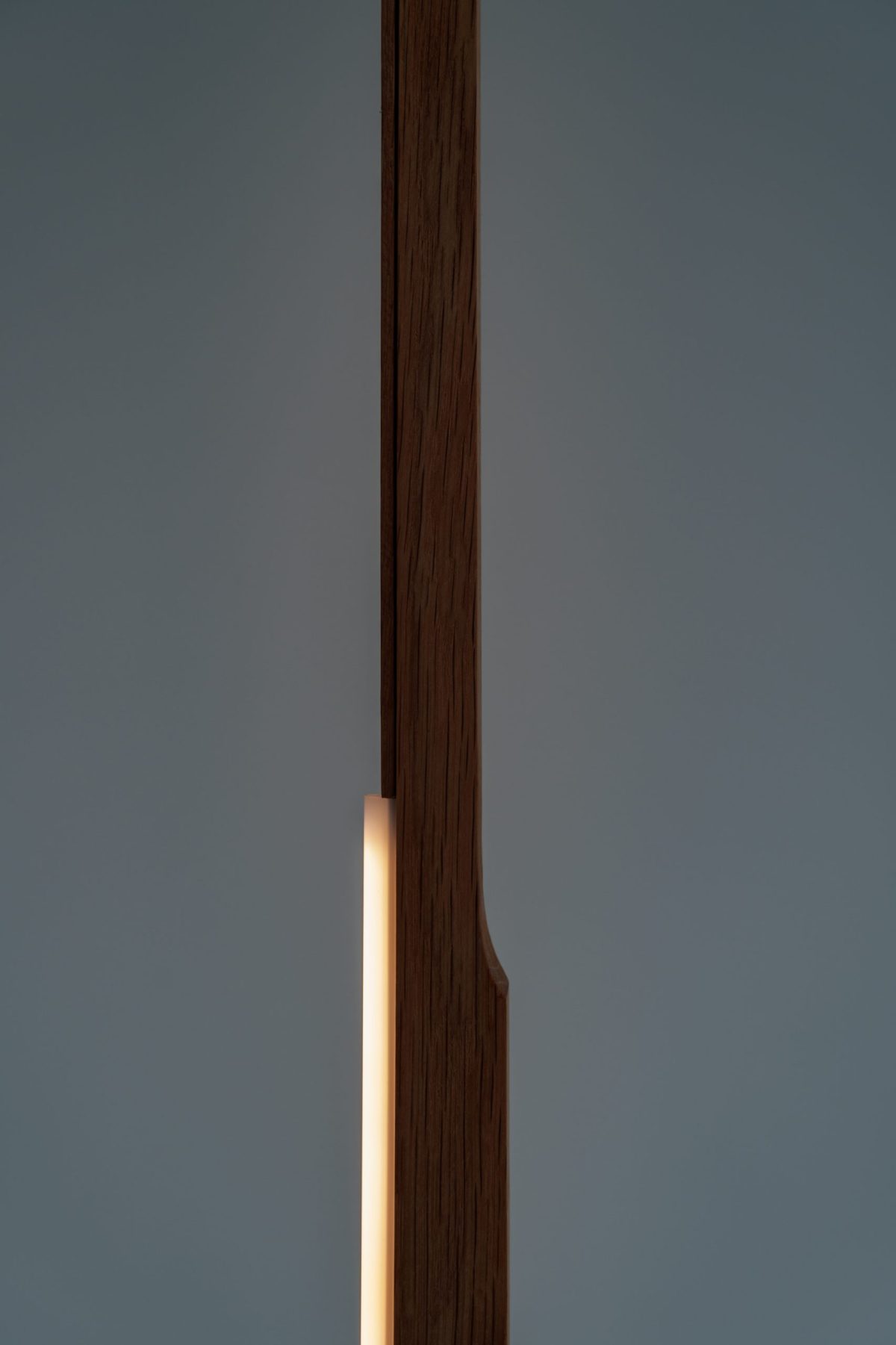
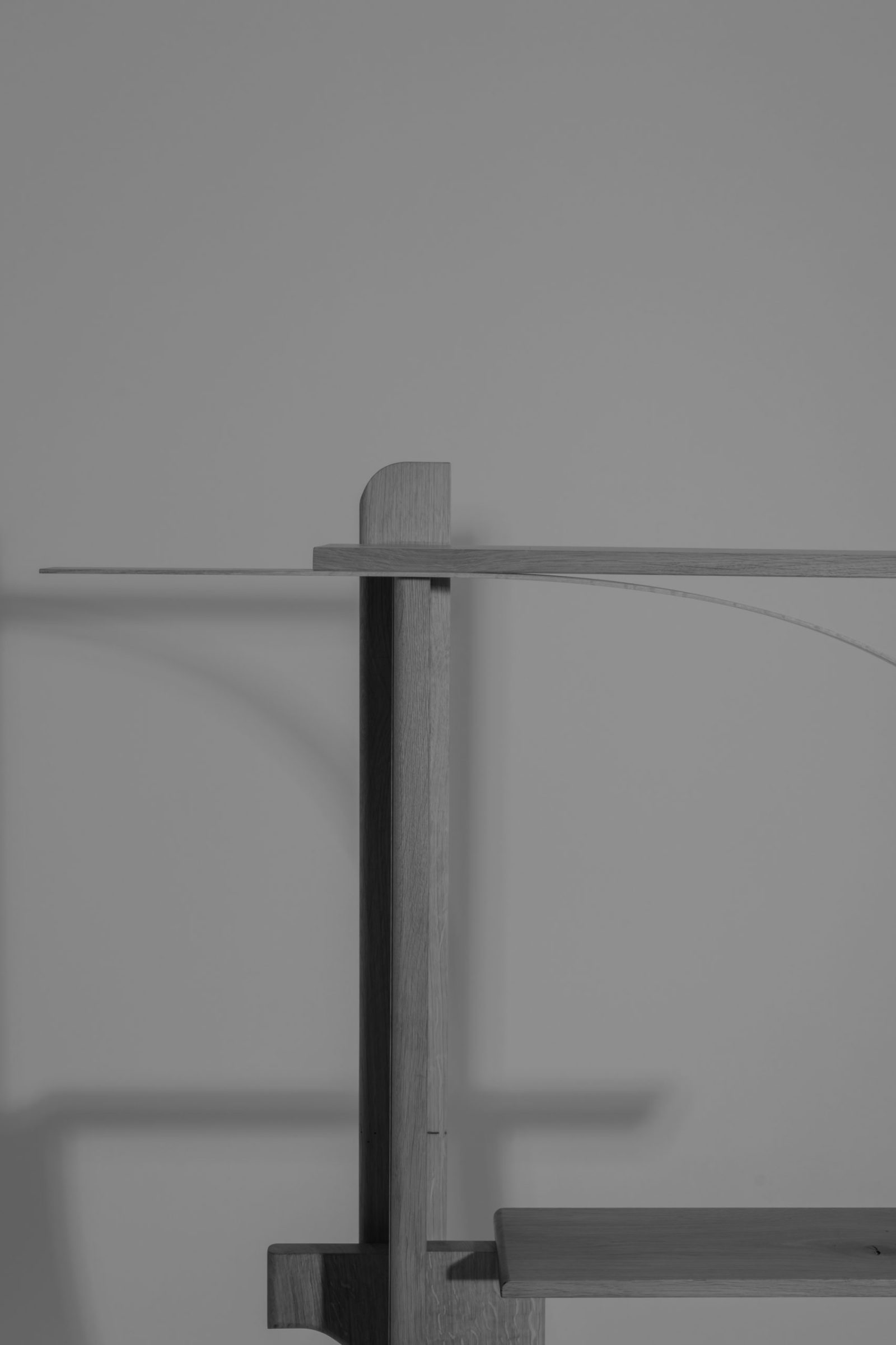
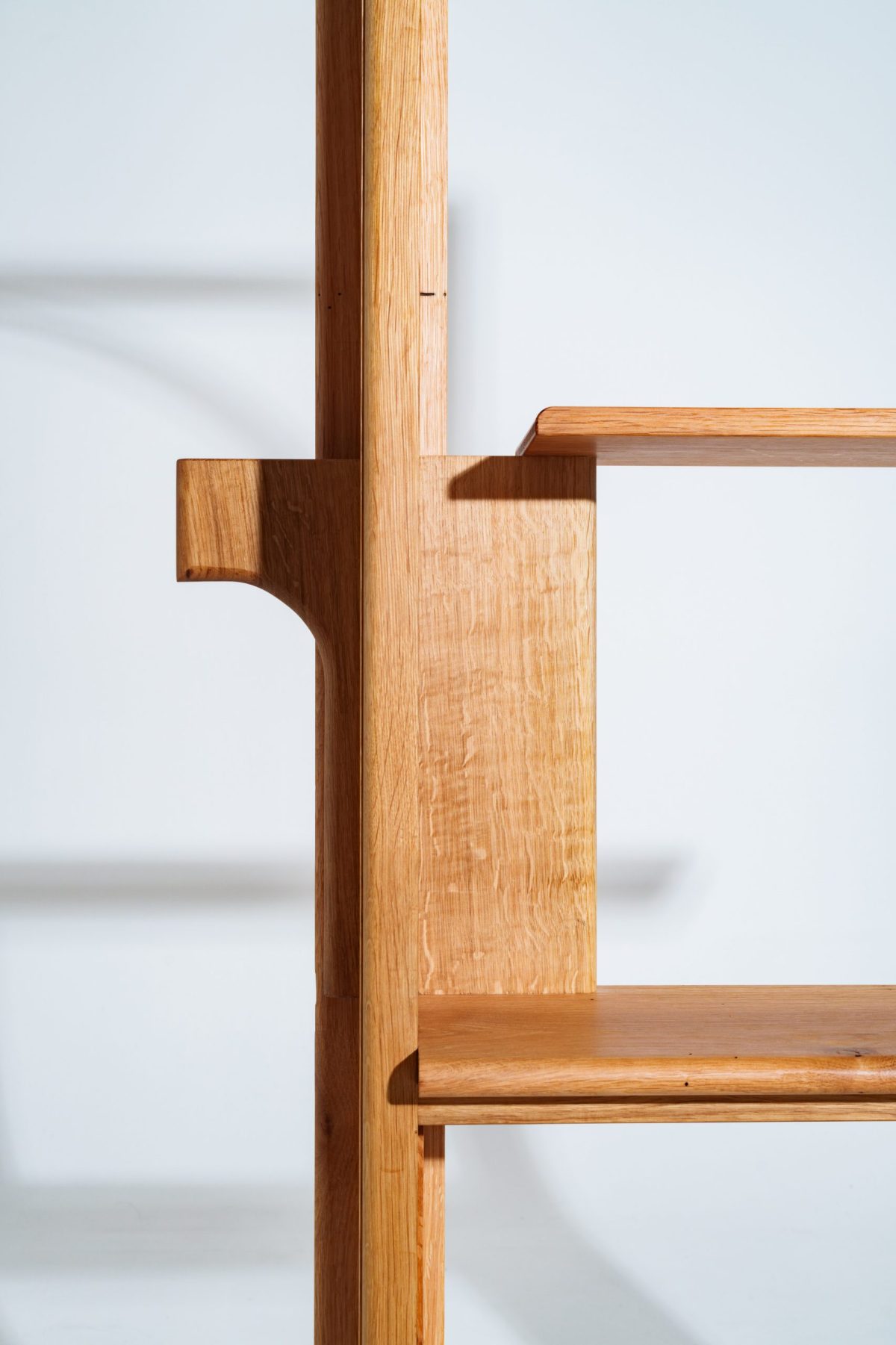
Spatial experiences play a central role in my creative process. I examine not only the overall atmosphere but also the details of each individual element that makes up a space. In any space, I envision the absurd stories that might unfold within it. At times, I imagine the connections between the elements that make up the structure—such as the floor, columns, walls, and ceiling. ARC emerged from this practice of drawing imaginary lines to connect the elements of a space. It reflects my journey from prototype to finished design, considering form, function, and expression. Each decision was revisited and reimagined from fresh perspectives, building the final piece layer by layer. Following the lines of ARC reveals hidden connections that invite personal interpretations of space. It creates new spatial experiences, offering another dimension that expands through objects.
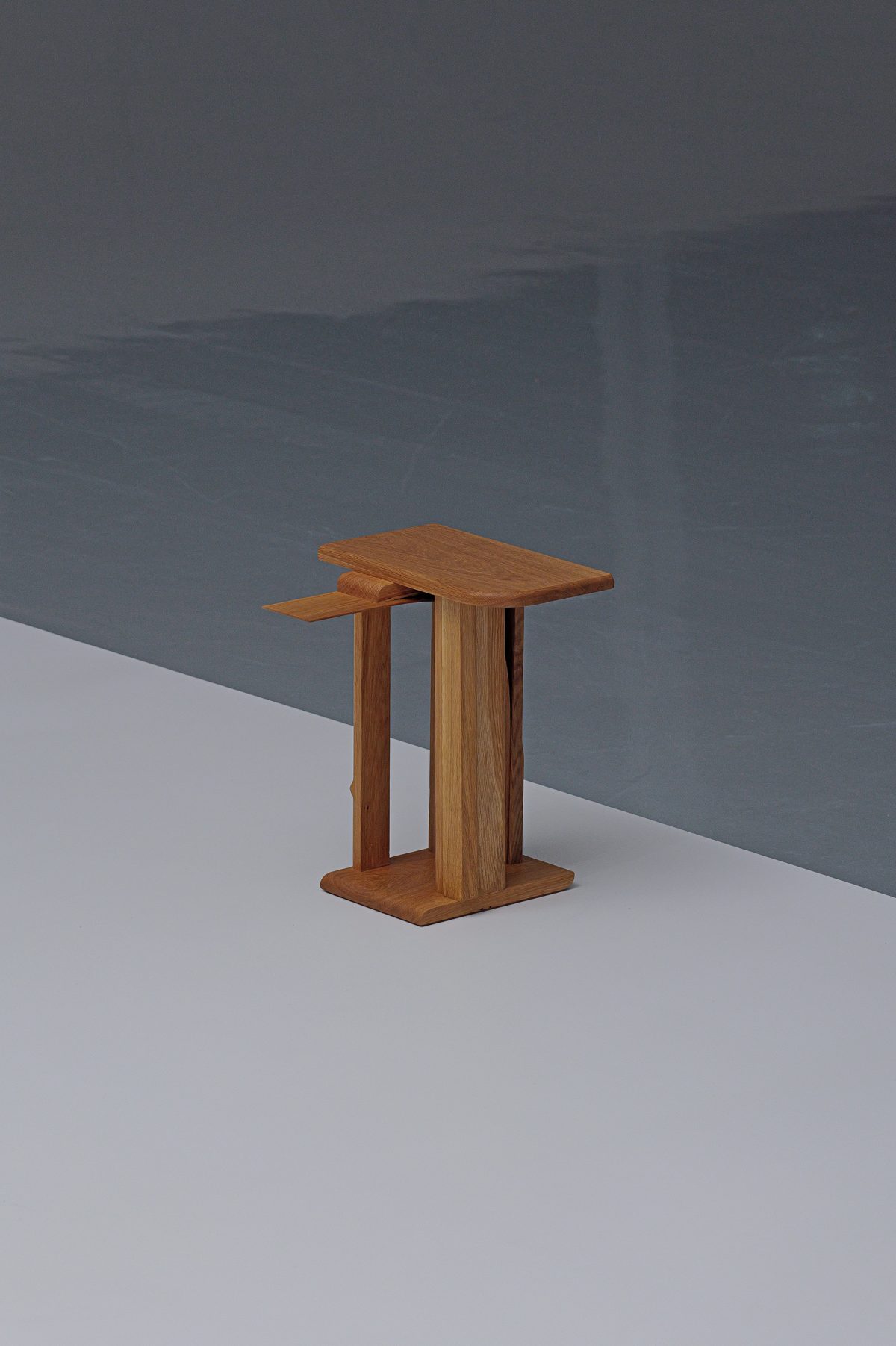
2025
Oak
Shelf — 117 (W) x 35 (D) x 196 (H) cm
Console — 236 (W) x 30 (D) x 90 (H) cm
Chair Typ 01 — 67 (W) x 55 (D) x 77 (H) cm
Chair Typ 02 — 36 (W) x 44 (D) x 83 (H) cm
Chair Typ 03 — 48 (W) x 48 (D) x 92 (H) cm
Stool — 76 (W) x 42 (D) x 45 (H) cm
Light — 32 (W) x 69 (D) x ~341 (H) cm
T02 Yellow — 8 (W) x 36 (D) x 31 (H) cm
Console Mini — 88 (W) x 19 (D) x 82 (H) cm